




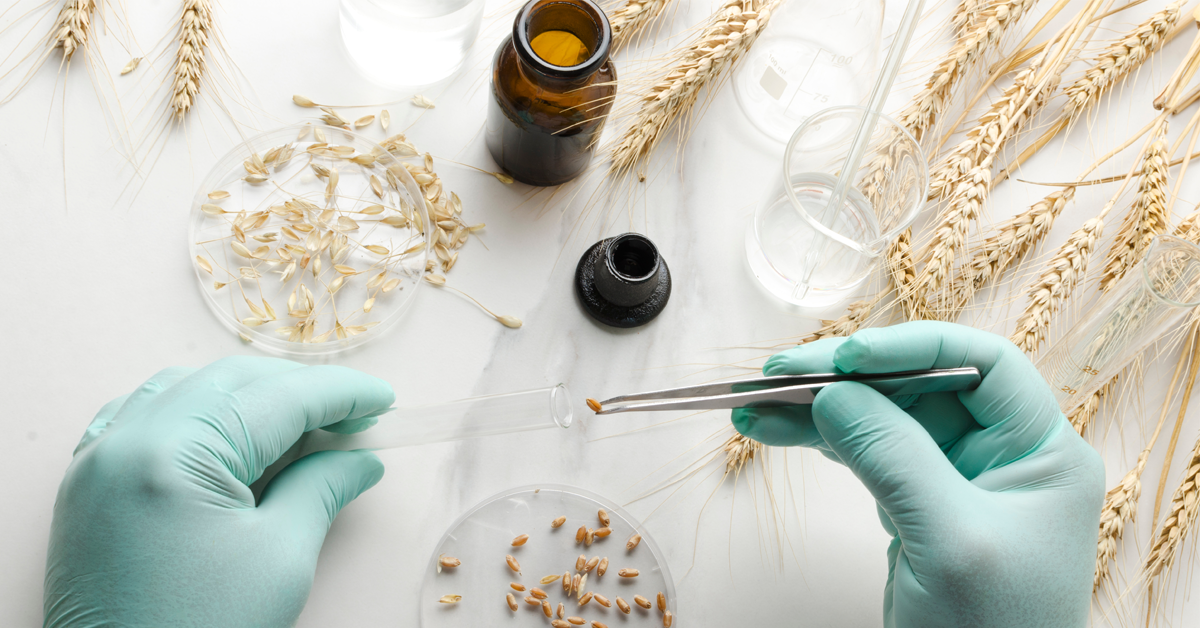
Learn how accredited laboratory, Fitosoil, conducts food analysis to determine the presence of heavy metals like inorganic arsenic.
Heavy metals are a group of chemical elements that have a relatively high density and a certain toxicity for humans. Many of the metals that have a high density are not especially toxic and some are essential elements for humans, regardless of the fact that at certain concentrations they can be toxic in some of their forms. However, there are a number of elements that in some of their forms can represent a serious environmental problem and it is common to refer to them with the generic term "heavy metals".
The danger of heavy metals is greater because they are not chemically or biologically degradable. Once emitted, mainly due to industrial and mining activity, they can remain in the environment for hundreds of years, contaminating the soil and accumulating in plants and organic tissues. In addition, their concentration in living beings increases along the food chain.
The best-known toxic heavy metals are mercury, lead and cadmium. There are another metals as arsenic, inorganic arsenic, tin (inorganic) and, more recently, nickel in Commission Regulation (EU) 2024/1987.
The maximum limits established for food are described in Commission Regulation (EU) 2023/915 of 25 April 2023 on maximum levels for certain contaminants in food and repealing Regulation (EC) No 1881/2006.
Fitosoil is an accredited laboratory for the analysis of heavy metals (Cd, Cu, Cr, Hg, Pb, Zn, NI) in fruit and vegetables, fish and leaves. Currently, Fitosoil is in the process of accrediting inorganic arsenic in various matrix such as food, fertilizers, soils, sludge and sediments.
Arsenic is a metalloid present in nature both naturally and from anthropogenic sources and that occurs in different chemical forms (inorganic and organic). Its inorganic chemical forms [As(III) and As(V) or the combination of both] are more toxic compared to organic arsenic. Fitosoil has a methodology to carry out the inorganic arsenic according to different international standards:
-
UNE-CEN/TS 17775:2022. Organic and organo-mineral fertilizers. Determination of inorganic arsenic content.
-
UNE-CEN/TS 17706:2022. Plant biostimulants. Determination of inorganic arsenic.
-
BS EN 16802:2016. Foodstuffs. Determination of elements and their chemical species. Determination of inorganic arsenic in foodstuffs of marine and plant origin by anion-exchange HPLC-ICP-MS.
-
UNE-EN 17374:2021. Animal feed. Methods of sampling and analysis. Determination of inorganic arsenic in animal feed by anion exchange HPLC-ICP-MS.
Inorganic Arsenic Determination Process
The determination of inorganic arsenic consisting of arsenite, As(III) and arsenate, As(V). A representative test portion of the sample is treated with a dilute solution of nitric acid and hydrogen peroxide in a hot water bath or microwave. The sample is thereby solubilized, arsenic species are extracted into solution, and As(III) is oxidized to As(V). Inorganic arsenic is selectively separated from other arsenic compounds using anion exchange HPLC (high performance liquid chromatography) coupled on-line to the element specific detector ICP-MS (inductively coupled plasma mass spectrometer) for the determination of the mass fraction of inorganic arsenic.
For the quantification of the amount of inorganic arsenic an external calibration with standards matched to the solvent matrix is used. A preliminary determination of total arsenic in aqua regia extracts is permitted which could reduce the number of samples where iAs determination is necessary because if the extractable aqua regia (total) arsenic content is below the legislative limit for iAs, then iAs determination is not necessary.
To learn more about food testing to determine heavy metals like inorganic arsenic or for a free consultation, please contact us.
About Fitosoil
Fitosoil is an ISO 17025-accredited private laboratory specialising in advanced analysis for the agri-food, environmental, industrial, and public health sectors. Our expert team and cutting-edge technology help our clients to comply with regulations, ensure safety, and improve their processes. As part of the Cotecna Group, a world leader in inspection, certification and analysis, we are committed to providing quality and reliable services. At Fitosoil, we provide accurate, customised analytical solutions tailored to each client's specific requirements.