





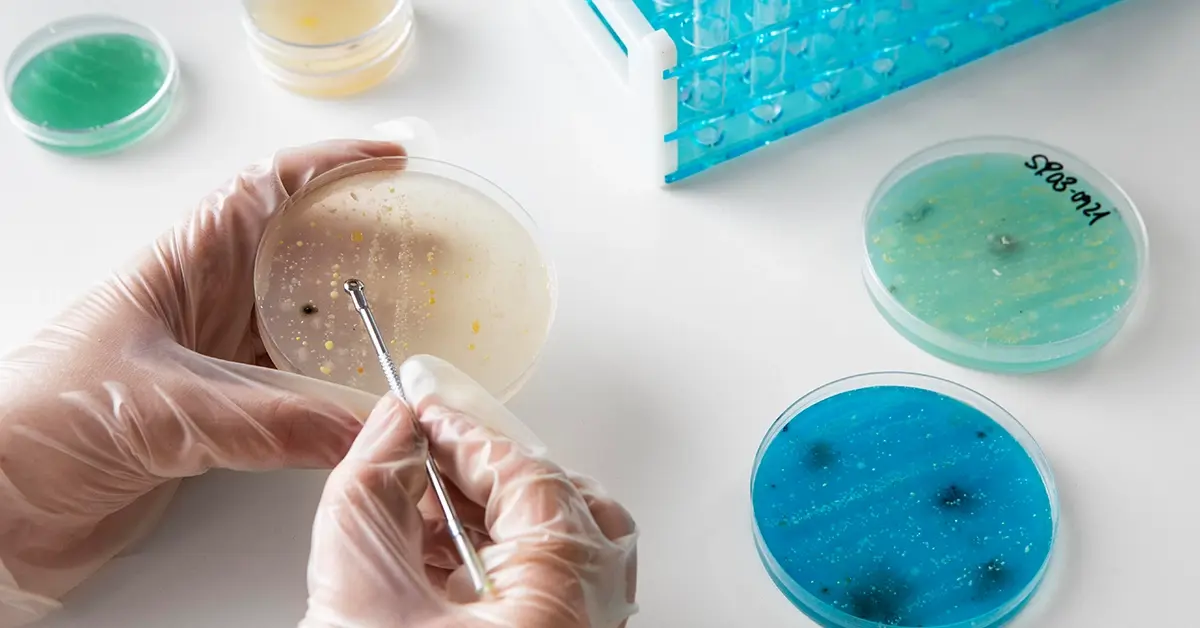
In the hospitality industry, food safety is not just a legal obligation, but a key element of quality, customer trust, and business reputation. Within this framework, microbiological surface control is positioned as an essential tool to verify the effectiveness of cleaning and disinfection processes, ensuring that food is handled in optimal hygienic conditions.
Regulatory framework in Spain
The legislation in force in Spain clearly establishes the responsibility of food operators to guarantee the safety of food and, by extension, the correct hygienic state of all surfaces in contact with it.
The fundamental pillar is Regulation (EC) No. 852/2004 on the hygiene of foodstuffs, which requires the implementation of systems based on the principles of HACCP (Hazard Analysis and Critical Control Points). This regulation states that all surfaces that come into contact with food must be kept clean, disinfected and in good condition.
Another highly relevant technical document is the Guide to Good Hygiene Practices, prepared by different sectoral associations and validated by the health authorities. These guidelines explicitly recommend the performance of microbiological surface checks as a HACCP verification tool.
Therefore, although the legislation does not set specific frequencies or universal microbiological limits for surfaces, it does establish the obligation to demonstrate, through verifiable evidence, that cleaning and disinfection procedures are effective.
Importance of microbiological surface control
In a hospitality environment, surfaces act as a potential vector for cross-contamination, especially in kitchens, preparation, storage and service areas. The presence of microorganisms on work tables, utensils, machinery or handlers' hands can compromise the safety of the final food.
Microbiological control allows:
- Verify the effectiveness of cleaning and disinfection protocols
- Detect deviations or failures in hygienic processes
- Preventing outbreaks of food poisoning
- Generate objective evidence for health audits and inspections
- Improve staff training and awareness
Controlled microbiological parameters
Microbiological surface analyses focus on hygiene indicators and, in some cases, the detection of pathogenic microorganisms.
1. Aerobic mesophilic microorganisms (AMR) count
It is the most general and widely used parameter. It indicates the total microbial load present on the surface and allows the overall level of cleanliness to be assessed.
- Interpretation:
- Low values → proper cleaning
- High values → possible hygienic deficiency
2. Enterobacteriaceae
This bacterial group is an excellent indicator of faecal or environmental contamination and deficiencies in cleaning processes.
- It includes bacteria such as E. coli, Klebsiella, Enterobacter, among others.
3. Escherichia coli
More specific indicator of fecal contamination. Their presence on surfaces is a clear sign of serious contamination or poor handling practices.
4. Staphylococcus aureus
Mainly related to human manipulation. Its detection can indicate problems in the hygiene of the staff.
5. Listeria monocytogenes (in specific cases)
Particularly relevant on contact surfaces in industries or kitchens that handle ready-to-eat foods. It is a high-risk pathogen.
6. Molds and yeasts
Important in humid environments or in storage areas. They can affect both food safety and quality.
Sampling methods
The most common methods for surface sampling are:
- Contact plates (RODAC): allow direct quantification on flat surfaces.
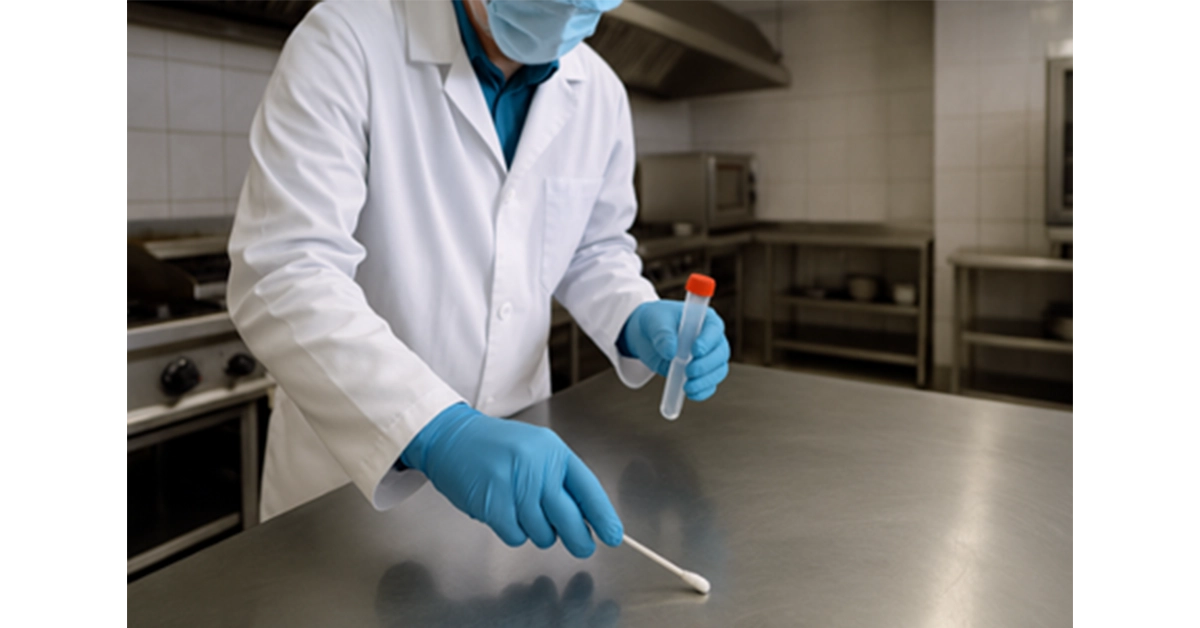
- Swabs: used on uneven or difficult-to-access surfaces, with subsequent laboratory analysis.
- Sterile sponges: ideal for larger surfaces or machinery.
All these methods must be applied following standardized protocols, guaranteeing the traceability and reproducibility of the results.
Interpretation of results
Unlike food, there is no harmonized legislation that sets microbiological limits for surfaces. For this reason, the following are used:
- Internal laboratory criteria
- International Recommendations (ISO, ICMSF)
- Historical trends of the establishment itself
The objective is not only to meet specific values, but also to evaluate the trend over time and detect improvements or deviations.
Fitosoil: a comprehensive solution for microbiological control in the hospitality industry
In this context, Fitosoil is positioned as a reference technical partner, offering a comprehensive, personalised and results-oriented service in the microbiological control of surfaces.
1. Material Preparation
Fitosoil provides all the necessary material for correct sampling:
- Sterile sampling kits (swabs, plates, sponges)
- Proper identification and labelling
- Clear and customer-specific instructions
This ensures the homogeneity of the process and the reliability of the results.
2. Sampling planning
Fitosoil's technical team designs a specific sampling plan, taking into account:
- Type of establishment (restaurant, catering, hotel, etc.)
- Critical areas (contact surfaces, utensils, equipment)
- Control frequency
- Risks associated with the activity
This approach allows you to optimize resources and focus control on the really critical points.
3. Sampling
Fitosoil offers flexibility in execution:
- Sampling by specialized laboratory personnel
- Or customer support and training for self-control
In both cases, it is ensured that the sampling is carried out according to standardised protocols, guaranteeing analytical validity.
4. Microbiological analysis
The Fitosoil laboratory performs the tests according to recognized ISO standards, using precise and traceable techniques, covered by its 17025 accreditation scope.
The main microbiological indicators are analysed, adapting to the needs of the client and the risk of the establishment.
5. Interpretation and advice
One of the differential values of Fitosoil is the expert interpretation of results:
- Clear, visual, and decision-oriented reporting
- Trend Assessment
- Identification of deviations
- Practical recommendations for improvement
This transforms analytical data into real management tools.
6. HACCP system integration
Fitosoil's service is not limited to analysis, but is fully integrated into the customer's self-monitoring system:
- Validation of cleaning and disinfection procedures
- Support in audits and inspections
- Continuous improvement of protocols
For all these reasons, microbiological surface control is an essential component in the management of food safety in the hospitality industry. Beyond regulatory compliance, it represents a key tool for quality assurance, risk prevention, and consumer confidence.
In this scenario, having a technical ally like Fitosoil allows companies in the sector not only to comply with the legislation, but also to raise their hygiene standards and differentiate themselves in an increasingly demanding market.
The combination of scientific rigour, practical approach and comprehensive service makes Fitosoil a high value-added solution for any hospitality establishment committed to excellence.
About Fitosoil
Fitosoil is an ISO 17025-accredited private laboratory specialising in advanced analysis for the agri-food, environmental, industrial, and public health sectors. Our expert team and cutting-edge technology help our clients to comply with regulations, ensure safety, and improve their processes. As part of the Cotecna Group, a world leader in inspection, certification and analysis, we are committed to providing quality and reliable services. At Fitosoil, we provide accurate, customised analytical solutions tailored to each client's specific requirements.